By Emily Dawson, Food Blogger, Recipe Developer, Photographer
20+ recipes developed and tested in her home kitchen before publishing on British Kitchen Hub.
Reviewed against our editorial standards.
Aperol Spritz Recipe 3 2 1
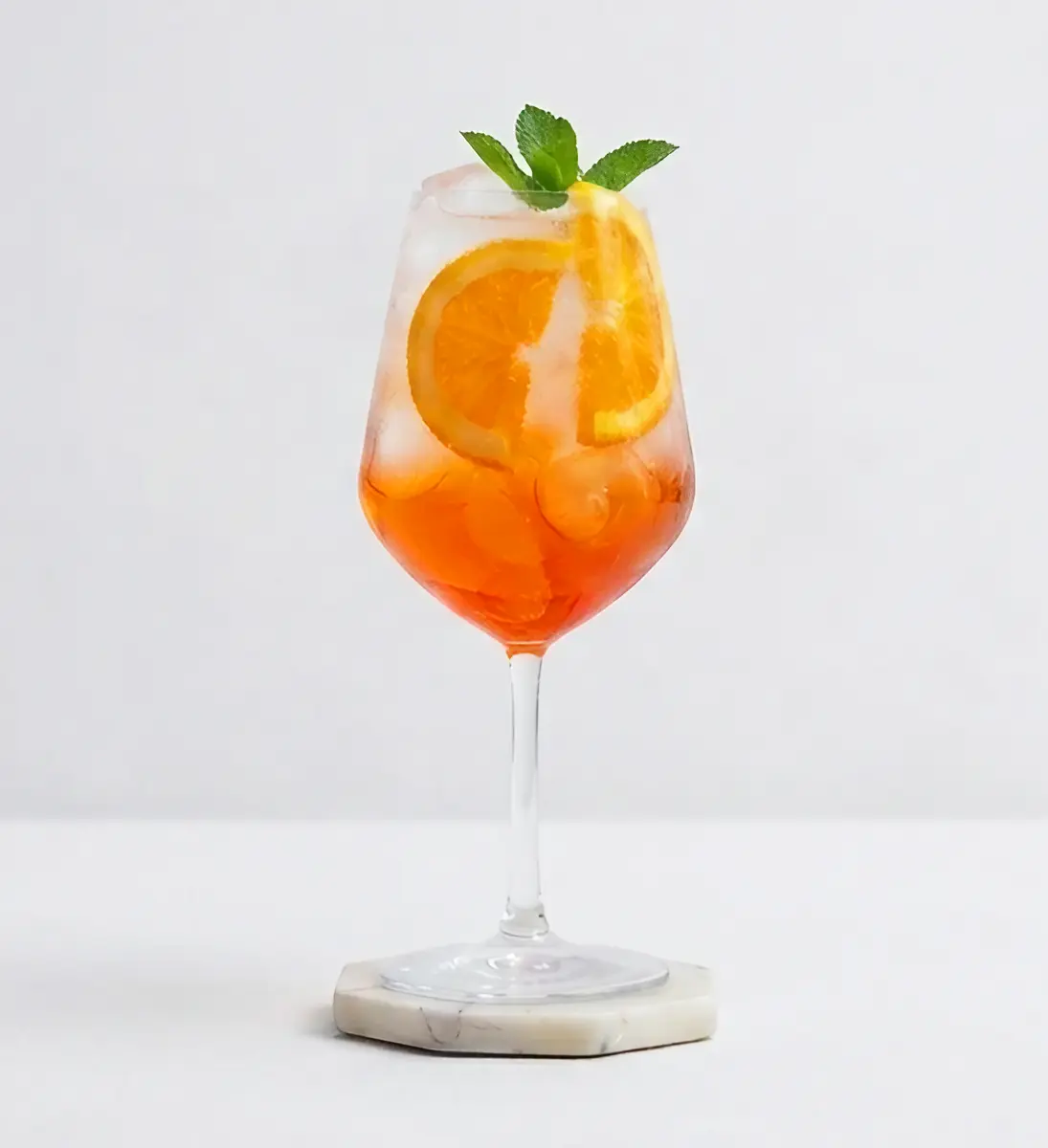
Aperol Spritz Recipe 3 2 1 The classic Italy Aperol Spritz recipe is the ultimate reference for your favorite aperitivo cocktail. The 3-2-1 ratio is not a guideline. This is the official recipe for the Italian aperitivo-style Spritz born in Veneto, northern Italy, early last century. You pour three parts of dry Prosecco for the bubbly backbone. This provides the telltale amber-orange shine and slight bitterness, with two parts. Aperol - their bittersweet orange aperitif created in 1919 from sweet & bitter oranges, rhubarb, and a secret blend of herbs. A half-cold soda water also prolongs the beverage with a low alcohol content. Fill it in a big balloon glass, add some ice, and garnish it with a fat slice of a new day orange. Remember the 3-2-1 rule, and you will never master the Aperol Spritz anywhere at anytime, no measuring equipment necessary.
Prep
2 mins
Cook
0 mins
Servings
Makes 1 cocktail
Difficulty
Easy
Aperol Spritz Recipe 3 2 1
The Aperol Spritz 3-2-1 is more than a cocktail recipe, it is a ratio that you learn once and remember for life. Three parts Prosecco. Two parts Aperol. One part soda water. That is it. No cocktail shaker, no muddling or complex technique. It is just a beautiful orange-copper drink that tastes like a summer afternoon in Venice.
The history of the Spritz traces back to some Austrian soldiers in the 19th century who stayed in this region and at every meal diluted local wines with a 'spritz' (splash) of water so as to drop ABV. That dash of water morphed into planetary bubbles for the next few decades, and then our sleek splash grafted to its paler foaming cousin along with buoyant bitter aperitif liqueurs that constitute this century's global interpretation: modern Spritz. The Aperol was invented in 1919 by the Barbieri brothers in Padua and is especially popular with a four-part vermouth-to-one-part soda ratio (though this was later refined to the classic three-two-and-a-half for officialdom). The aperitivo is an Italian tradition, but perhaps the most popular today in Italy is the Aperol Spritz.
The 3:2:1 ratio is simply perfect, as it makes the right balance. Since the cocktail contains three equal parts of Prosecco, that means it is predominantly light and bubbly. Aperol gives it its color, bittersweet orange flavor, and just enough structure without dominating the palate at two parts. Soda water in one part gives it room to breathe and cuts some of the sweetness without harshly cutting out your alcohol by volume, usually 8 something percent or so, meaning it's both low and an ideal dinner aperitif that sharpens rather than closes the appetite.
Variations
- Super Aperol Spritz (1:2 ratio) is a little stronger and made for outdoor boozers all over the world : 40ml of Aperol, 60ml with prosecco, and top up with soda in eco-friendly cups.This produces a darker amber colour, more noticeable bitter orange aroma, and slightly increased alcohol by volume. For people who think the classic 3-2-1 is too light.
- Campari Spritz: swap out the Aperol for a Campari in that same 3-2-1 way. Campari is much more bitter and higher in alcohol (24% ABV vs Aperol's 11%), producing a heavier, herbaceous drink with a ruby red colour. Great with bartenders and cocktail aficionados who favour depth over sweetness.
- The Elderflower Aperol Spritz: Increase the classic 3-2-1 build with a splash of elder flower liqueur (St-Germain) at ~15 ml. The floral folkiness ties the coda to bitter Aperol and dry Prosecco just right - but it is also an aromatic dimension of sophistication… Top with a thin slice of cucumber next to the orange.
- Even Alcohol-Free Aperol Spritz (Mocktail): Use a non-alcoholic Italian aperitivo in place of the Aperol, such as Lyre's Italian Spritz or Crodino Biondo, and use sparkling white wine or premium tonic water instead of Prosecco! Use that same 3-2-1 ratio and cook the same way. Approximately 60 to 90 calories depending on the brand of cereal that you use.
- Pitcher Aperol Spritz (Batch for a Crowd): Scale up the 3–2–1 directly - pulse on same, but with a generous amount in a large jug just before service. Do not add ice to the pitcher - serve individual glasses of ice on the low instead and avoid dilution. Makes approximately 8 servings.
How to Make Aperol Spritz Recipe 3 2 1 (Step-by-Step)
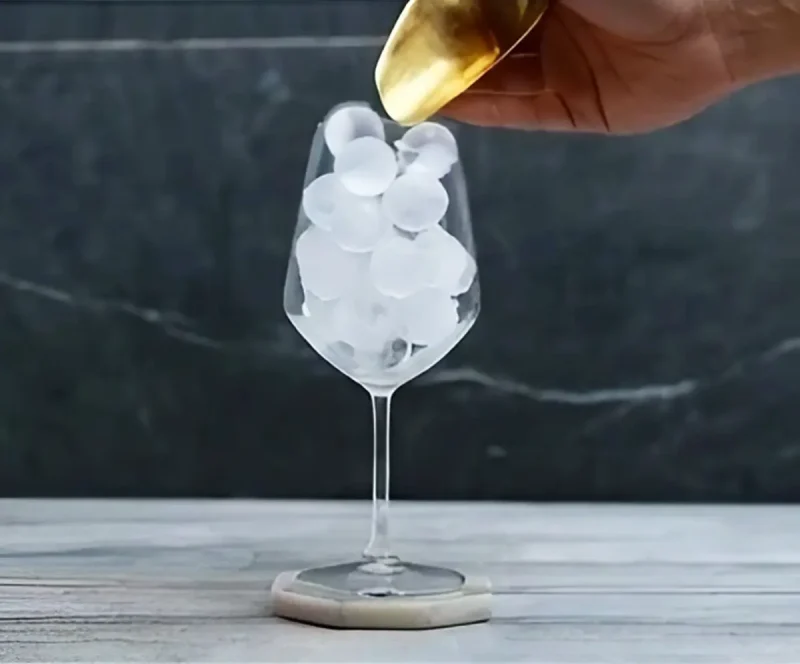
Understand the 3-2-1 ratio
The 3-2-1 method is the only recipe. 3 parts prosecco, 2 parts Aperol, and 1 part soda water; remember it. The proportions are infinite, if you make an individual (3 oz : 2 oz : 1 oz) or a batch for twenty, the ratio is constant. Here's why the Aperol Spritz has taken over: it's simple enough to remember in a single sip and balanced enough not to grow old.
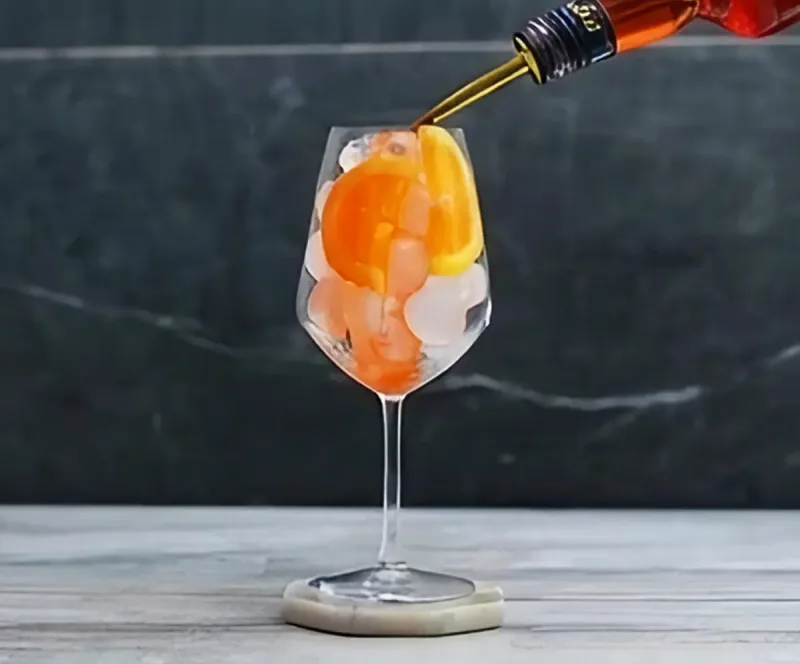
Build over ice in the glass
The Aperol Spritz is a built drink - it's poured directly into the serving glass, not shaken or stirred elsewhere. The first rule is to fill the glass at least two-thirds full with big ice cubes. So far from being an afterthought, ice chills and ever-so-slightly dilutes the drink as you construct it — this is what presents those flavors nicely, hardy with a clean finish.
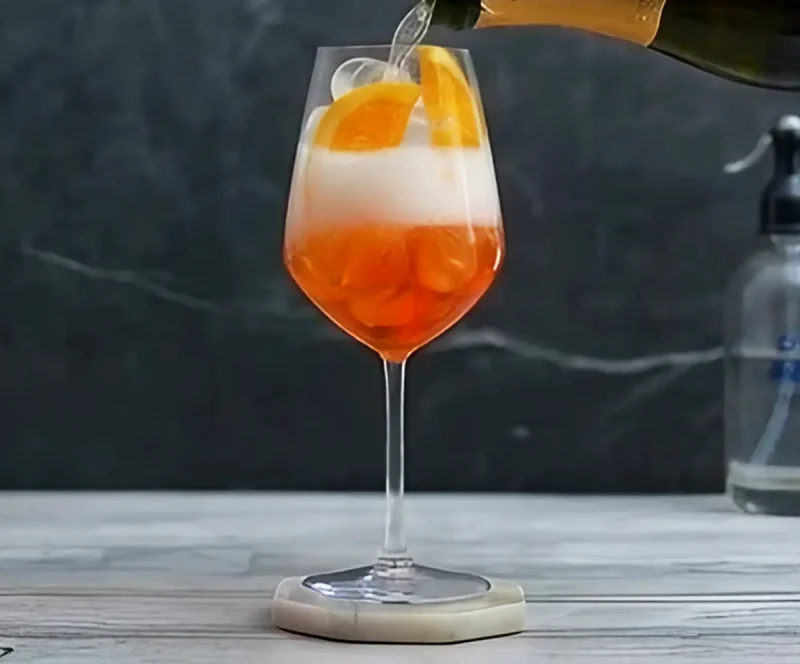
Layer in the correct order: Prosecco first
The Prosecco comes up first before the Aperol interlaces through. And it's important: the bubbles in Prosecco form a tumultuous base for which Aperol festively floats to earth. If you pour Aperol over the ice first and then add Prosecco, it forces the lighter Montpellier cut-off end before the flask, which makes that drink less integrated. And soda water always goes last - it floats on top and keeps the fizz working all the way into that final sip.
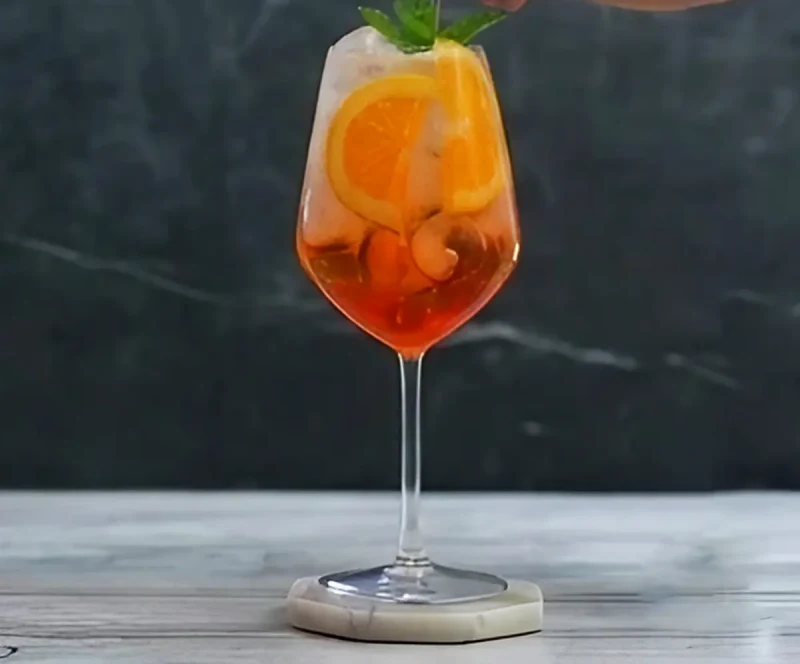
Garnish with orange and serve at once
A Spritz without a slice of orange is like a naked vat in the sky; you inhale citrus before every sip. That perfume cuts through and becomes part of drinking it, not just something on top. Apply a real orange as opposed to an aged wheel or (worse) a cherry, which is restricted for use in the not-spritz-belonging Aperol Negroni. Carefully place the half-wheel in the glass, flesh-side facing inward and lightly against the ice. You have about 30 seconds to serve after building. Carbonation is the spirit of your cocktail, and it starts evaporating as soon as it's poured into a glass.

★★★★★ 5.0 from 3 votes
Aperol Spritz Recipe 3 2 1
Save this recipe, share it with friends, or browse more Drinks ideas below.

Equipment
- Large balloon wine glass or large stemmed wine glass (at least 400 ml capacity)
- Jigger or measuring jug (optional - the ratio works by eye once you know it)
- Long bar spoon for gentle stirring
- Ice bucket or tray (large cubed ice preferred over crushed)
Save this recipe!
Get this sent to your inbox, plus get new recipes from us every week.
Ingredients
Instructions
- In either case, chill your glass prior to building the drink: freeze it for 5 minutes or fill with ice water while you prep and discard before serving. The colder the glass, however, the longer fizzy drinks remain effervescent.
- Add large cubes up to the brim of a balloon glass. Bigger cubes melt slower than crushed ice and allow the drink to cool down without being diluted too quickly.
- Add the Prosecco in 3 parts (around 90 ml or 3 oz). The reason you pour in sparkling first is to preserve that carbonation; it prevents bubbles from being poured onto ice, thus going flat… and means all other ingredients gently fold through the fizz instead.
- Top the Aperol on top of the Prosecco in 2 parts (around 60 ml or about 2 oz). It has a slight copper-orange glow-somewhere between a sunset gradient with swirling and solid uniformity depending on how much work you want to put into your canister.
- And finally, top with a splash of cold soda water in 1 part (around 30 ml or 1 oz). This is the third and final part of the 3-2-1 ratio. Skip it and you get a shorter drink and harsher sweetness, the full Venetian balance.
- Use a long spoon to stir the drink once or twice, no more than three rotations. You want to mix the layers, not beat out the bubbles.
- Garnish with a new orange whistle. One of the more classic ways to do this is a slice of orange halfway through the rim so that it perches just above water. Serve immediately - do not let the drink rest because you will lose all those bubbles in minutes.
Frequently Asked Questions
What exactly is the Aperol Spritz 3 2 1 ratio?
The 3-2-1 ratio is simply 3 parts Prosecco, two parts Aperol, and one part soda water. In real-world measurements for a single serving, that is 90 ml (3 oz) Prosecco, 60 ml (2 oz) Aperol, and soda water. Basically the equivalent of half portion sizes. So if p is for pitch, perfect ratio scales for any volume, use 3 cups. Prosecco, 2 cups Aperol & 1 cup soda water to fill a pitcher serving size of eight. It's the official Aperol-approved recipe, which is pretty much how they're mixing it in bars all over Italy.
What Prosecco is best for an Aperol Spritz?
For the most authentic result, use a dry or extra-dry Prosecco DOC from Veneto. Brut Prosecco also does the job, with a little added crispness. Skip sweet or demi-sec Prosecco with Aperol adding sweetness already, a sweet Prosecco helps the drink veer into cloying territory. You don't require a pricey bottle; the ideal Prosecco is an outstanding one in the 10-pound/$12-18USD range. The best substitutes are French Crémant d'Alsace and dry Spanish Cava Brut; Prosecco is basically in a league of its own.
Can I make Aperol Spritz in advance or as a pitcher?
You can batch the Aperol and Prosecco in advance, but just don't add either soda water or ice until you're ready to serve both will make your drink flat. Finally, the last mix is stirring together 3 cups. Prosecco and 2 carats Aperol within an airtight jug. Chill for no more than two hours. To serve, pour over glasses of ice and top off each glass with a splash of soda water. Add garnish as desired. Doing this for a party means you only need to spend about 30 seconds per drink at serving time.
Why does my Aperol Spritz taste too sweet?
There are three main culprits: you might be drinking a sweet Prosecco instead of dry or extra-dry, the soda water could have been underpoured (soda is what cuts through sticky sweetness), and ice-cold Aperol pulled straight from the freezer drowns out much-needed bitter notes. Use the full 1 part soda water in that 3-2-1 ratio and this is nonnegotiable. If the classic ratio still feels too sweet, go for a 2-2-1 version (less Prosecco relative to Aperol) that advances the bitterness or toss in some fresh orange juice.
What is the difference between Aperol Spritz and Campari Spritz?
The same 3-2-1 build (Prosecco + soda water) with a different aperitif, and suddenly everything adds up. Aperol (11% ABV) is less alcoholic and sweeter, with more citrus notes yet a brighter orange color true to heart, it ticks off the accessibility box as well as most palates. Campari is a bitter, herbaceous beverage with an alcohol by volume of 24% and yields a deeper ruby-red drink than Fernet along with a much more complex flavor profile suited to acquired tastes. Aperol is for the novice; Campari is for those who have passed this threshold.
How many calories are in an Aperol Spritz 3 2 1?
The classic 3-2-1 Aperol Spritz, which is composed of the following (90 ml Prosecco + 60 ml Aperol + 30 ml soda water), contains between only about 125 to 140 calories per drink. Aperol adds around 70 calories for a 60 ml pour, and Prosecco brings an additional roughly equal to what I had seen, anywhere from 65 to about 90 calories in a standard-size glass (90 ml), so it is basically soda water, which is calorie-free. With that in mind, the Aperol Spritz thus becomes one of your better low-calorie cocktail choices loads lighter than a margarita (250 to 300 calories) or even a piña colada (400+ calories).
What glass should I use for an Aperol Spritz?
A real Italian glass is a big balloon of the variety for red wine or simply a large cup on a leg with a volume of 400 ml (14 oz). The bowl is wide enough for the orange garnish to be placed properly, gives a good amount of ice, and allows scents to go on top of the drink. Aperol Spritz glasses are garnished specifically for the drink in Italy think ginormous wine-shaped styles with a slightly wider base. No problem whatsoever with a normal large red wine glass. And steer clear of tumblers, highball glasses, or even coupe glasses for that matter; they fail to convey the visual punch as well as perfume.
Notes
The ice rule: large cubes, not crushed
Big ice is a must in any Aperol Spritz. A big chunk of ice has less surface area to compensate for its volume, so it cools the drink down efficiently but doesn't melt quickly enough and dilute the drink into a watery orange ghost of itself. Crushed ice looks pretty cool but makes the drink watery and flat quite rapidly. If your freezer just makes little cubes, then use them - you just need to go through more of them and drink it faster.
The one technique that keeps it bubblier longer
In a glass, put ice. Pour in the Prosecco. Add Aperol. Fill with soda. Give one gentle stir. Or you could altogether avoid the ice while building, adding it last - pouring liquids into a dry glass and then placing the ice on top (instead of pouring over) retains so much more carbonation. Some Italian bars that do a lot of volume use this counter-intuitive method to make it fizzier. Test the two out, and see which one you like.
Nutrition
Calories: 138 kcal | Carbohydrates: 14 g | Sugar: 12 g | Sodium: 8 mg | ABV: approx. 8–10%
Nutrition information is automatically calculated and should only be used as an approximation.
Like this? Leave a comment below!
Free Recipe Book
Download my Healthy Food Recipe Book, a collection of nourishing, from-scratch recipes for everyday cooking. Practical meals and snacks you can make at home.
Get the recipe book